
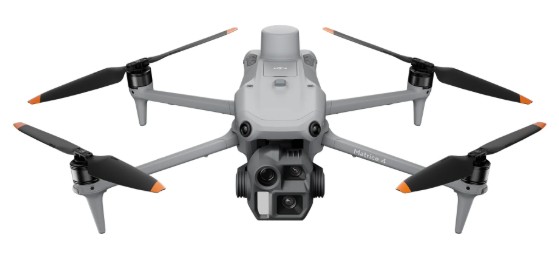
There are new regulations in place (Janaury 2026) governing the use of drones (weighing more than 100g). Martin Mulholland explains.
As of January 1, 2026, UK regulations require anyone flying a drone or model aircraft weighing 100g or more outdoors to pass a free online CAA theory test for a Flyer ID.
If the drone has a camera, the operator must also register for an Operator ID (£11.79/year) and display it on the drone. Key Requirements (100g - <250g with camera):
- Flyer ID: Mandatory for all pilots (must be renewed every 5 years).
- Operator ID: Mandatory for owners/responsible persons of camera drones (must be renewed annually).
- Labeling: The Operator ID must be clearly marked on the drone.
The Drone Code: Pilots must follow the Civil Aviation Authority (CAA) Drone Code, which includes keeping the drone in sight, staying below 400ft (120m), and avoiding restricted airspace.
For drones weighing 250g or more, these requirements (Flyer ID and Operator ID) still apply, along with more stringent operational restrictions regarding distance from people and built-up areas.
Note also that the maximum altitude is 120m (400ft) above ground level and the rules regarding Visual Line of Sight (VLOS) are that the drone must be visible to the naked eye at all times, without binoculars or cameras.
The Distance Rules are as follows:
- < 250g (e.g., DJI Mini): Can fly in A1 category (over people/residential areas) but not in crowds.
- 250g - 2kg: Generally must stay 50m from uninvolved people, or 5m in low-speed mode (A2 subcategory).
- > 2kg: Must stay 50m from people and 150m from residential/recreational areas (A3 subcategory).
There are also other requirements:
- Restricted Airspace: Never fly in Flight Restriction Zones (FRZs) around airports, prisons, or military sites without permission.
- Privacy: Data protection laws apply; avoid filming people without consent.
- Drone Classes (Post-Jan 2026)New drones are classified from C0 to C6, with C0-C1 (under 250g-900g) allowed more freedom in A1/A2 areas compared to older, non-marked drones.
The penalties for violating these regulations can result in fines, equipment confiscation, or imprisonment for endangering aircraft.


